Dubai CV Format 2026: Guide, ATS Tips & Common Mistakes
A Dubai CV is genuinely different from a Western one — a photo is standard, visa status is commonly disclosed upfront, and most employers here run every application through ATS screening software before a human ever reads it. This guide covers the correct format, exactly what to include, real before-and-after examples, and the mistakes that quietly get strong candidates filtered out.
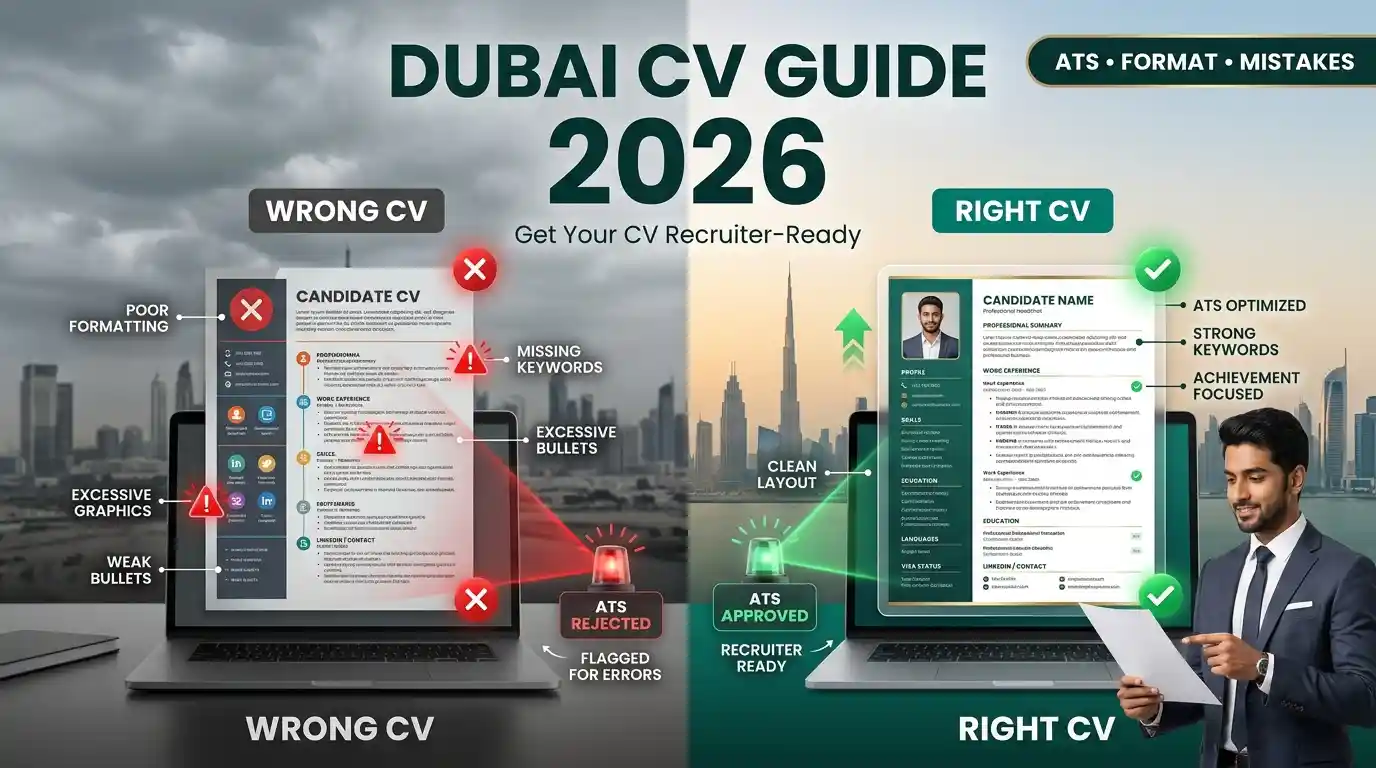
I’ve reviewed enough CVs from friends job-hunting in Dubai to notice the same pattern over and over: people bring a perfectly good CV from their home country, change the address, and wonder why they’re not getting callbacks. The problem usually isn’t the person’s experience — it’s that a CV built for a US or UK hiring culture is genuinely reading as incomplete or off-format to a Dubai recruiter, who’s used to seeing a photo, a visa-status line, and a tighter, keyword-dense summary at the top. This guide walks through exactly what changes and why.
Overview: What’s Genuinely Different About a Dubai CV
The core differences all come down to what a Dubai recruiter expects to see immediately, without digging: a photo, current visa/residency status, and a summary tight enough to scan in ten seconds. None of this is about your qualifications being weaker — it’s purely about format matching local hiring norms. Getting these details right is often the difference between a CV that gets opened properly and one a recruiter skims for five seconds before moving to the next application.
CV Format: The Basics
What to Include, Section by Section
1. Header & Personal Details
Name, photo, contact details, and — this is the part that surprises many first-time applicants — nationality and current visa/residency status. Recruiters in Dubai commonly screen for this early, since it affects hiring timeline and cost; leaving it off your CV doesn’t hide it, it just means the question comes up later instead of being answered upfront.
2. Professional Summary
Three to four lines, positioned right under your header, summarizing your experience level, core skill area, and what you’re looking for. This is the section an ATS and a human recruiter both scan first — keyword-match it to the specific role you’re applying for, not a generic version reused across every application.
3. Work Experience
Reverse chronological, with each role showing company, title, dates, and 3–5 bullet points focused on outcomes and achievements rather than a list of duties. See the before/after examples below for exactly what this looks like in practice.
4. Education & Certifications
Degree, institution, and graduation year; relevant certifications (RERA, DHA, PMP, or similar depending on your field) listed clearly since they’re often specifically screened for.
5. Skills & Languages
A short, scannable list — software/technical skills relevant to the role, plus languages spoken, since multilingual ability (especially Arabic) is a genuine differentiator in many Dubai roles.
ATS Optimization: Why Your CV Might Never Reach a Human
Most mid-to-large UAE employers, and virtually every government hiring portal, run applications through an Applicant Tracking System before a recruiter sees them. The system scans for keyword matches against the job description, and a CV that doesn’t use the same terminology as the listing — even if the underlying experience is a genuine match — can get filtered out silently, regardless of how qualified the candidate actually is.
Real Before & After Examples
These are the kind of rewrites I actually see making a difference — same underlying experience, dramatically different how it reads to a recruiter or an ATS.
Before
Responsible for managing the sales team and handling client relationships.After
Led a 6-person sales team and grew quarterly client retention by 22% through a revised account check-in process.Before
Worked on social media for the company.After
Grew Instagram following from 4,000 to 19,000 over 8 months and increased engagement rate by 35% through a revised content calendar.Before
Duties included handling customer complaints and processing refunds.After
Resolved an average of 40+ customer cases weekly, maintaining a 96% satisfaction rating across a high-volume support queue.Cover Letters & LinkedIn
A cover letter isn’t always mandatory in Dubai, but a short, tailored one — three to four paragraphs, specific to the role and company — can meaningfully help entry-level and career-switch applications stand out from a pile of near-identical CVs. Just as important: keep your LinkedIn profile complete and current, since many recruiters check it before or instead of reading a full CV, and a thin or outdated profile can quietly undercut an otherwise strong application.
Common Mistakes
Frequently Asked Questions
Yes — unlike CVs in the US, UK, or Canada, including a professional headshot is standard and generally expected practice on a Dubai/UAE CV.
One to two pages for most roles — one page for entry-level and fresher candidates, up to two pages for experienced professionals.
Nationality and current visa/residency status are commonly included on UAE CVs, since recruiters often screen for this early.
An Applicant Tracking System is software that scans and ranks CVs against a job description before a human ever sees them — keyword-matching your CV to the listing matters as a result.
Not always required, but a short, tailored cover letter can meaningfully help entry-level and career-switch applications stand out.
It’s common on UAE CVs but not strictly mandatory — some candidates omit it.
PDF is the safest default; some ATS systems specifically prefer Word (.docx) for easier text parsing — check the job posting’s stated preference.
Very — many recruiters check a candidate’s LinkedIn profile before or instead of reading the full CV.
No — prioritize the most recent and most relevant 10–15 years of experience; older or unrelated roles can be summarized briefly or omitted.
Contact details and photo, a short professional summary, work experience, education, skills, and optionally certifications, languages, and a brief personal-details line.
It’s one of the most common reasons CVs get filtered out — tailoring keywords and the summary to each specific job description significantly improves response rates.
Generally no — salary expectations are typically discussed during the interview or application form stage, not stated upfront on the CV.
Quantify results wherever possible — “increased regional sales by 18% over two quarters” communicates far more than “responsible for sales.”
No — freshers can lead with education, internships, academic projects, and relevant extracurricular or volunteer experience.
Passport copy, education certificates, previous experience letters, and passport-size photos are commonly requested once you’re shortlisted.
Yes, for most private-sector roles English is the standard business language in Dubai; a bilingual Arabic/English CV can be an advantage for government-facing roles.
- Reviewed by the NearbyFinders Careers Team.
- Format conventions (photo, visa-status disclosure, ATS prevalence) reflect widely and consistently reported UAE hiring practice at the time of writing.
- This guide is for general informational purposes only and does not constitute career or legal advice.

Written & Reviewed by Haleema Bukhari
Haleema moved to Dubai at age five and built her career as an HR Manager before starting her own career coaching practice. With over 10 years of experience in recruitment and HR consulting in Dubai, she provides expert advice on job search, hiring trends, and relocation.