
Logistics Jobs in Dubai (2026): Salary, Companies & How to Apply
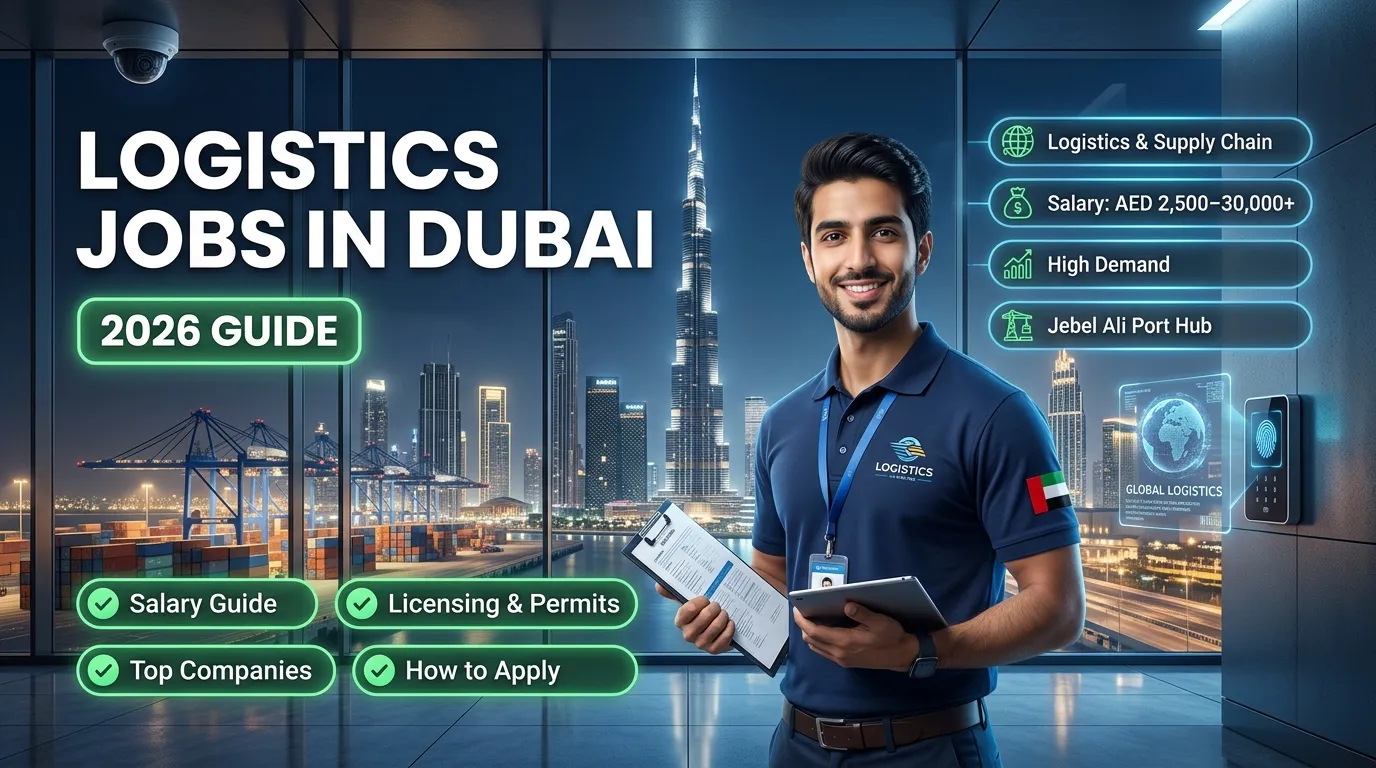
Say “logistics jobs in Dubai” to ten different people and you’ll get ten different pictures in their heads — and honestly, they’d all be right. This city runs three overlapping logistics worlds at once. There’s Jebel Ali Port, the biggest port in the Middle East and the engine behind the whole JAFZA free zone. There’s the freight-forwarding and 3PL crowd — the customs brokers and shipment coordinators who make Dubai one of the world’s busiest re-export hubs. And then there’s the newer layer: e-commerce warehouses and last-mile delivery fleets keeping up with a city that expects same-day everything.
This guide walks through all three — what the jobs actually pay, what licensing you’ll need for equipment roles, who’s hiring right now, and how to put together an application that actually gets read.
Overview: Dubai’s Three-Engine Logistics Economy
At the ground level, you’ve got port and terminal operations — Jebel Ali’s container yards, run mostly by DP World, where the work is physical, shift-based, and built around heavy equipment. One step up the chain is freight forwarding and third-party logistics (3PL) — the customs paperwork, documentation, and multimodal coordination that keep Dubai’s re-export business moving. And then there’s e-commerce and last-mile logistics — the warehouse floors and delivery fleets behind Amazon.ae, noon, and every app promising delivery within the hour.
Here’s the catch: a job titled “Logistics Coordinator” could belong to any of these three worlds, and the day-to-day, the systems you’ll need to know, and where the role can actually take you are pretty different depending on which one you land in. Worth figuring out which lane you’re aiming for before you start firing off applications.
Why Logistics Jobs Are in Demand
- Jebel Ali’s sheer scale: as the Middle East’s largest port and part of DP World’s global network, it keeps hiring going across terminal, engineering, and corporate logistics roles almost continuously.
- The free zone economy: JAFZA’s customs-free trading and warehousing status keeps freight forwarding, clearance, and warehousing jobs in steady demand no matter what global trade is doing that quarter.
- E-commerce growth: people in Dubai expect fast delivery, and that expectation keeps fulfilment centres and last-mile teams hiring year after year.
- Air cargo: DXB and DWC’s cargo operations, including Emirates SkyCargo, add a whole air-freight layer on top of the port and road-freight side of things.
- Turnover keeps demand alive: a lot of mid-level roles ask for 2–5+ years of specific experience, which means companies are constantly replacing people even when the sector itself isn’t growing fast.
Types of Logistics Jobs in Dubai
Warehouse Associate / Picker-Packer
Forklift / Crane Operator
Logistics Coordinator / Executive
Freight Forwarder / Customs Clearance Agent
Warehouse / Operations Manager
Supply Chain Manager
Last-Mile Delivery Rider / Fleet Coordinator
Port Terminal Operations / Control Room Staff
Licensing: Heavy Machinery and Customs Clearance
Two corners of this industry have a real licensing gate, and it’s worth knowing about both before you apply anywhere near them.
RTA Heavy Forklift / Machinery License (Category 7)
Want to operate a forklift or similar heavy equipment in the UAE? You’ll need an RTA-issued driving license — usually referred to as the heavy forklift category, Category 7 (some training centres list it as Category G). That’s on top of a basic education requirement. Most port-side equipment jobs at a place like Jebel Ali also want to see hands-on experience inside an actual working port, not just a warehouse — general forklift time doesn’t always count the same way to a port employer.
Because you’re handling cargo inside a secured commercial facility, employers usually run their own background and reference checks before they’ll clear you for site access, separate from the RTA license itself. Treat that step seriously — it’s not a formality, and it does add time compared to a standard warehouse hire.
Customs Clearance and HAZMAT Handling
Freight forwarding and customs clearance jobs need a solid grip on Dubai Customs and JAFZA paperwork. If you’re handling hazardous materials shipments, you’ll also need to know the clearance protocols for those goods specifically. None of this comes from a single certificate — it’s built through training and time on the job — but recruiters still treat it as a hard requirement for forwarding roles, not a bonus skill.
Systems Knowledge That Works Like an Informal Credential
Inside port operations, knowing your way around a terminal operating system (TOS) genuinely sets you apart in an interview. One thing worth flagging: the exact system varies by terminal and by operator — some run Navis-based platforms, and DP World’s own Jebel Ali terminals have moved parts of their operations to proprietary systems in recent years. Rather than naming one specific system on your CV, it’s safer (and more accurate) to describe your TOS experience in general terms and let the employer tell you which platform they’re actually running.
Skills and Qualities Employers Actually Screen For
Salary Guide by Role
| Role | Monthly Salary (AED) |
|---|---|
| Warehouse Associate / Picker-Packer | 2,500–4,500 |
| Last-Mile Delivery Rider | 3,000–5,500 |
| Crane / Heavy Machinery Operator (port) | 5,500–8,500 + shift allowances |
| Logistics Coordinator / Executive | 6,000–9,000 |
| Freight Forwarder / Customs Clearance Agent | 7,000–12,000 |
| Warehouse / Operations Manager | 10,000–15,000 |
| Supply Chain Manager | 15,000–25,000 |
| Senior Terminal / Logistics Director (DP World tier) | Up to 30,000+ |
Port jobs are worth judging on their own terms, pay-wise. The work is tougher physically and the shifts are rougher, so base pay at terminal operators usually comes with night-shift top-ups and zone-specific allowances stacked on top. Add in family health insurance, end-of-service benefits, and subsidised housing and transport for port staff, and the real value of a port-side offer can look very different from what the headline number suggests — even when a warehouse job down the road is advertising a similar base salary.
Top Companies Hiring in Logistics
DP World
Agility, Kuehne+Nagel, DHL Global Forwarding
Aramex
Amazon.ae & noon
Smaller JAFZA-based freight and trading companies
How to Apply: Step-by-Step
For port and terminal roles, don’t rely on one application channel. Submit a properly detailed profile through DP World’s official careers portal, and separately, try reaching out to current terminal shift managers on LinkedIn to flag your hands-on systems experience directly — it genuinely helps. For e-commerce and 3PL roles, the standard route works fine: apply through the company’s own careers page or a major job board like Indeed or Bayt. Those hiring cycles move a lot faster than the security-heavy port-side process.
Field Notes: What the Job Is Actually Like
A quick note: the two scenarios below are composite pictures built from patterns that come up again and again across Dubai’s port and freight-forwarding world. Think of them as representative, not a transcript of one specific person’s day.
A Day in Jebel Ali’s Control Room
No two shifts look the same. One morning you’re rerouting equipment because an access lane got blocked. By lunch you’re fast-tracking a HAZMAT shipment through customs before a deadline. By the afternoon you’re on the phone talking down a freight forwarder whose cargo just got delayed by weather offshore — all of it happening in humid coastal heat with the clock always running. People who’ve worked this role describe it less as following a script and more as constant, real-time problem-solving. That’s also exactly what interviewers tend to probe for, more than textbook supply chain theory.
From Freight Forwarding Coordinator to Operations Manager
Most people start as a junior coordinator, handling shipment paperwork and customs documents with someone checking their work. Within two to three years, that usually turns into running full freight files solo — booking, documentation, clearance, delivery, the whole chain. Getting promoted into an operations or warehouse manager role tends to come down to one thing: owning a full client account well, not just clocking years. The higher you go, the more the job becomes about managing supplier and transporter relationships rather than just moving boxes.
Common Mistakes to Avoid
Frequently Asked Questions
Yes — you’ll need a valid RTA-issued heavy forklift/machinery driving license (Category 7), plus real experience operating equipment inside a commercial shipping terminal. Port employers also run their own background checks before granting seaport access.
Longer than a standard warehouse or e-commerce hire, usually — background verification and internal port-security clearance both take time. Build some extra weeks into your job search if this is the track you’re aiming for.
Yes — warehouse associate, picker-packer, and last-mile delivery roles are commonly open to freshers, while coordinator, supervisor, and management roles usually expect 2+ years of relevant experience.
A freight forwarder specifically manages shipments from origin to destination, including customs documentation. A logistics coordinator is a broader title used across warehousing, distribution, and internal supply chain work.
WMS familiarity matters across the board. For port and terminal roles, TOS experience specifically stands out — just know the exact platform varies by terminal, so describe your experience broadly and let the employer confirm which system they run.
- Salary ranges cross-checked against multiple current 2026 UAE logistics and port-sector salary sources
- Licensing terminology verified against current RTA/Dubai driving-license category guidance rather than informal branded names
- Company profiles drawn from published careers pages and job-board listings current as of mid-2026
- Field-notes section clearly labelled as composite/illustrative rather than presented as verified individual testimony